Introducing Tyler Dunston as the 2023-24 Public Humanities and Museum Pedagogy Intern
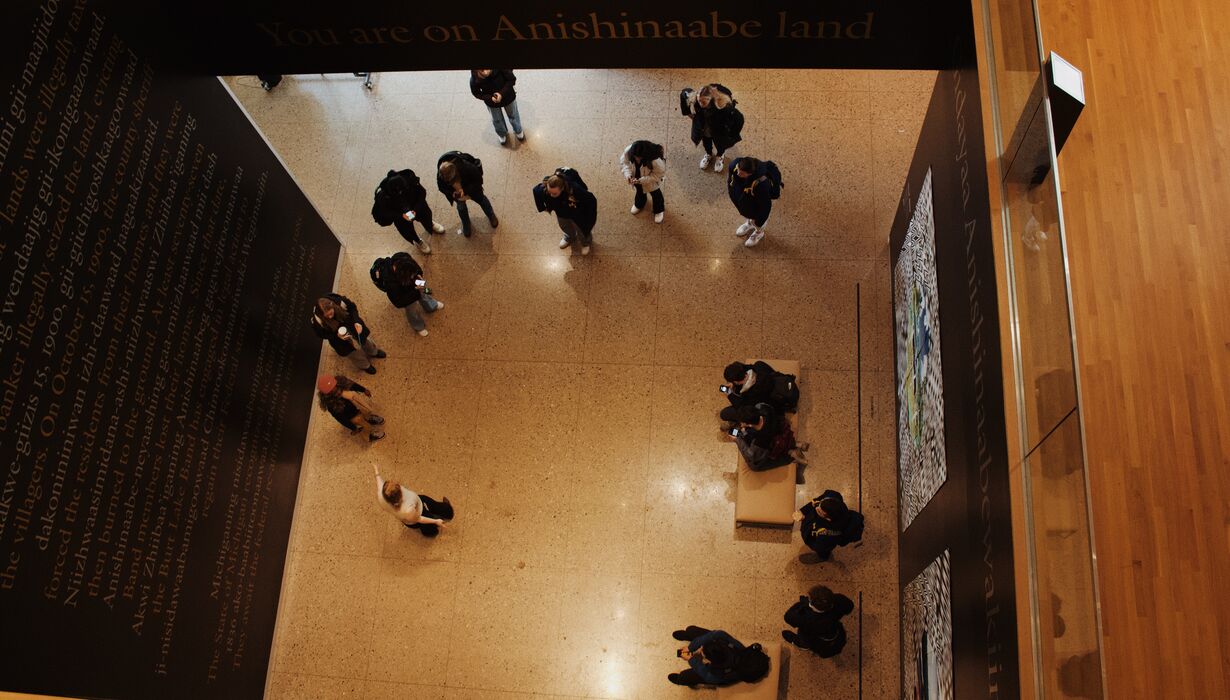
As a member of the University Learning team, Tyler has designed and led UMMA course visits for university classes in a wide variety of departments, selected works of art to discuss based in collaboration with instructors, and prepared resources for classes. “I especially enjoy selecting works of art for each class. Discussing ideas with instructors, learning about their courses, and thinking about which works would spark discussion—it’s such a unique way to engage with the collection and with people at the university, a kind of collaborative curation tailored to a course’s needs.” Through his work in University Learning, and through attending Curatorial Deep Dive meetings at the museum, Tyler has been grateful for the chance to learn more about museum curation and museum pedagogy, and how the two are interrelated.
In addition to his work on the University Learning team, he has been in the processes of organizing and co-facilitating an ekphrastic poetry workshop at the museum this winter, in collaboration with Fellows in the University of Michigan’s Helen Zell program, and he is currently at work on creating resources for educators—activities, creative prompts, examples, etc.—who are interested in helping students to engage with artwork at the museum through creative writing. In general, hopes to help create opportunities to think critically about creative adaptation across different art forms in the museum context.
Tyler’s interest in ekphrastic writing as a form of creative and intellectual engagement with art stems in part from his academic background. Tyler is a Ph.D. candidate in English Language and Literature at Michigan, currently writing on the poetics of suspension in early modern English poetry. In addition to literary studies, his research is influenced by studies of visual art and music. He is also a writer and visual artist, having completed his M.F.A. in poetry just before coming to Michigan and minored in art practice as an undergraduate, and his love of artmaking plays a big role in his academic work and vice versa. Given his interest in both creative and scholarly work, and his engagement with a variety of art forms, his time at the museum has been especially rewarding. “Being at UMMA this year has been a really nourishing experience for me, both creatively and intellectually. I’ve learned so much.”
More from UMMa