Session 1: Print Demonstration and Exhibition Tour of American Sampler with Nicole Marroquin
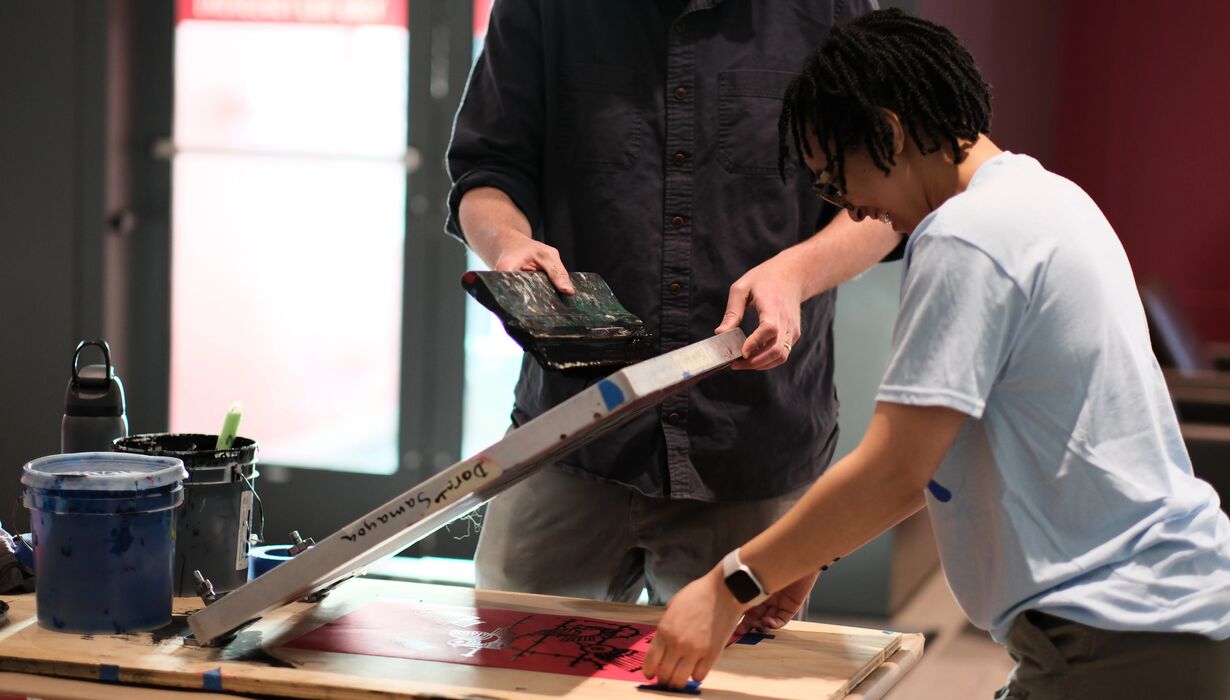
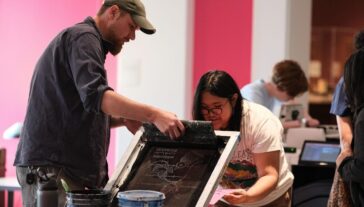
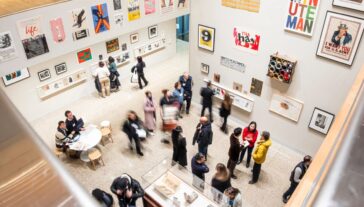
Professor Nicole Marroquin will lead a conversation about American Sampler: Activating the Archive. This research-driven, immersive exhibition in UMMA’s Vertical Gallery is a collaboration with the Joseph A. Labadie Collection of anarchism, protest, and social movements housed in the U-M Library’s Special Collections Research Center.
The exhibition centers on 1950s–1970s movements for Black freedom, civil rights, and antiwar activism, clarifying the aspirations and effects as well as the violent opposition these movements encountered. American Sampler invites visitors to examine how legacies of grassroots organizing and protest in U.S. history shape the present.
Free and open to the public, registration required.
More About
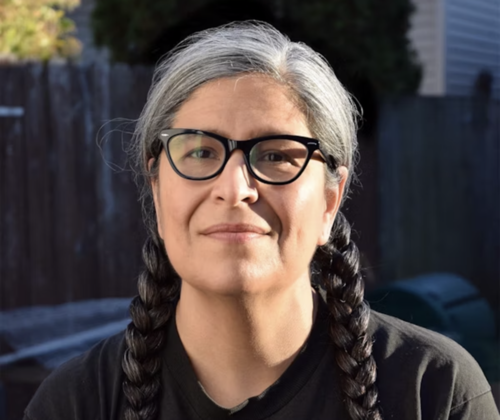
Nicole Marroquin
Nicole Marroquin is an artist who explores spatial justice, belonging and Latinx history through projects that decenter dominant narratives to address displacement and erasure. Through research and creative practice, she aims to recover and re-present histories of Black and brown youth and women’s leadership in the struggle for justice. Recently she has presented projects at the Institute for the Humanities at the University of Michigan, the Kochi Biennale, the Annual Conference of the American Association of Research Librarians, University of Maine, New York Archivist Round Table, Jane Addams Hull House Museum, DePaul Museum of Art, on WLPN Lumpen Radio, Gallery 400, Hyde Park Art Center and more. Her essays are included in the Visual Art Research Journal, Counter-Signals, the Chicago Social Practice History Series, Revista Contratiempo, Where the Future Came From, and Organize Your Own: The Politics and Poetics of Self-Determination Movements. She is a 2022 United States Artist Fellowship recipient and a member of the Justseeds and Chicago ACT collectives.
SUPPORT
Lead support for American Sampler is provided by Joseph and Annette Allen, Nicole and Matthew Lester, Erica Gervais Pappendick and Ted Pappendick, Catherine Glynn Benkaim and Barbara Timmer, Susan and Richard Gutow, U-M Arts Initiative, U-M Institute for the Humanities, the Mary L. Wolter Welz Fund, and the Marvin H. and Mary M. Davidson Endowed Fund. Additional generous support is provided by U-M CEW+ Frances and Sydney Lewis Visiting Leaders Fund, U-M National Center for Institutional Diversity Inclusive History Project, U-M Initiative for Democracy & Civic Engagement, U-M Department of History, and U-M Eisenberg Institute for Historical Studies.