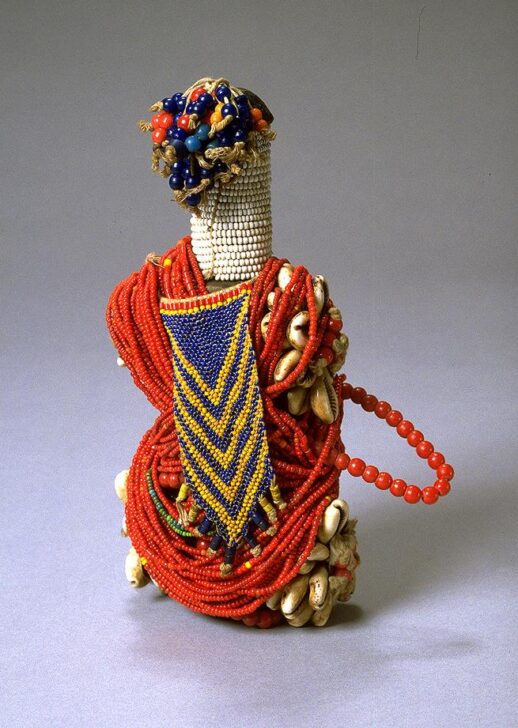
Ham pilu fertility figure
Northern Cameroon; Northeastern Nigeria; Southern Chad; Fali
Description
Subject Matter:
This object may have been made by Fali peoples. Fertility figures were carved by a newly engaged man for his wife-to-be. The figure, called ham pilu, reflects the expected first child. Until the child is born, the wife would care for the figure and carry it on her back. Once the first child is born, the figure would be stored away as a family heirloom.
References Cited:
Cameron, Elisabeth L. 1997. “In Search of Children: Dolls and Agency in Africa.” African Arts, Vol. 30, No. 2: pp. 18-33, 93.
Gebauer, Paul. 1979. Art of Cameroon. Portland, Or.: Portland Art Museum.
Lembezat, Bertrand. 1961. Les populations païennes du Nord-Cameroun et de l'Adamaoua. Paris: Presses Universitaires de France.
Lembezat, Bertrand. 1952. Mukulehe; un clan montagnard du Nord-Cameroun; coutumes, rites, croyances. Paris: Berger-Levrault.
Northern, Tamara. 1984. The Art of Cameroon. Washington, D.C.: Smithsonian Institution.
Page, Donna. 2007. A Cameroon World. New York: QCC Art Gallery Press.
Physical Description:
Wooden columnar figure heavily decorated with beads. The top of the figure has a cluster of thread, each with 2 or 3 beads attached. The neck of the figure is covered with white seed beads. Clusters of cowrie shells form the limbs of the figure. The body of the figure is covered with strands of red beads. One side of the figure has a blue and yellow chevron patterned beadwork with fringe.
Usage Rights:
If you are interested in using an image for a publication, please visit https://umma.umich.edu/request-image/ for more information and to fill out the online Image Rights and Reproductions Request Form.