New Exhibition at UMMA Unites Visionaries Carmen Herrera and Leon Polk Smith for First Time
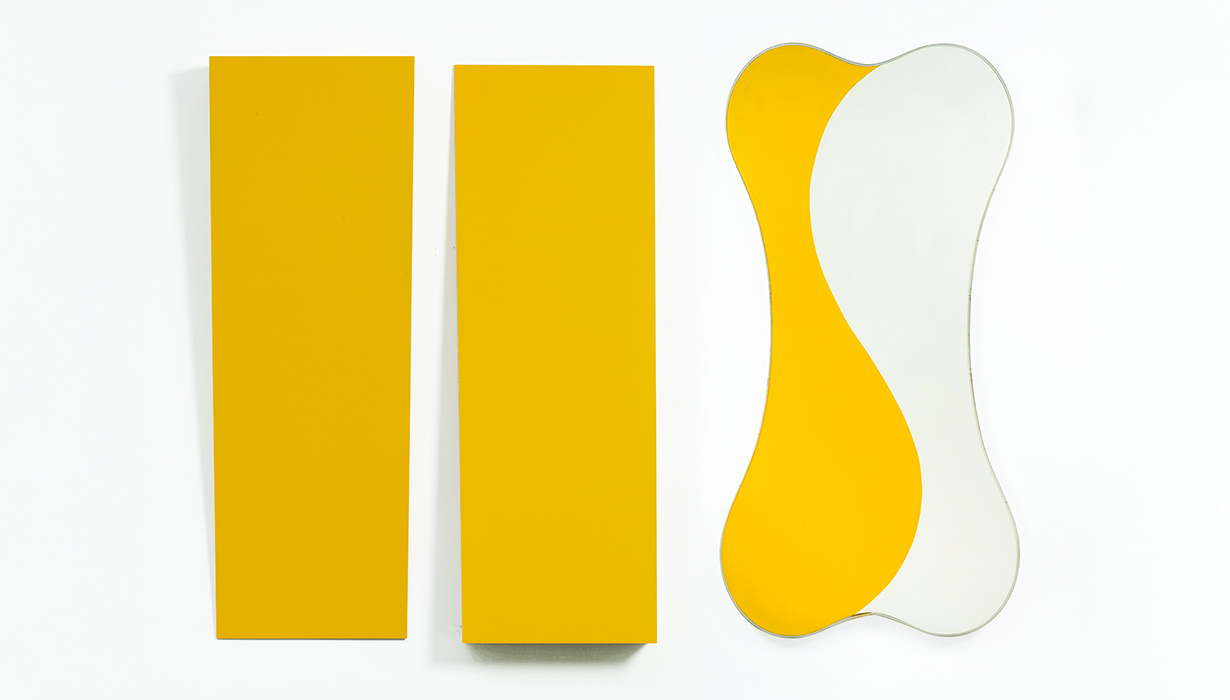
Groundbreaking exhibition celebrates decades-long friendship and dialogue between two trailblazers of geometric abstraction
Ann Arbor, MI—June 2025—The University of Michigan Museum of Art (UMMA) has announced Both Sides of the Line: Carmen Herrera & Leon Polk Smith, an exhibition uniting two of the 20th century’s most visionary abstract artists. Despite a decades-long friendship, this exhibition marks the first examination of their work side by side, offering a profound exploration of their intertwined legacies and shared impact on American abstraction. Both Sides of the Line opens on August 30, 2025.
Curated by Dana Miller, a renowned expert on Carmen Herrera, the exhibition brings together more than 45 works, including paintings, works on paper, and three-dimensional objects, tracing the independent artistic developments and the dialogue between their works. Despite their different backgrounds—Herrera a Cuban immigrant, and Smith a gay man who was born in Indian Territory—their approaches to abstraction intersected and diverged in dynamic ways. Both Sides of the Line reveals how their unique yet parallel journeys redefined the language of geometric abstraction, even as they navigated an art world often indifferent to their groundbreaking innovations.
A Personal and Professional Dialogue
In 1964, Herrera and Smith became neighbors in downtown New York City, forging a friendship and creative exchange that lasted decades. While Herrera’s art was frequently relegated to exhibitions devoted to Cuban or female artists, and Smith’s work was sometimes neglected in favor of other male contemporaries, their shared commitment to abstraction challenged dominant artistic narratives. Together, their work illuminates how two artists pushed the boundaries of form, color, and line in ways that remain deeply relevant today.
“This exhibition is a testament to the quiet yet radical ways Carmen Herrera and Leon Polk Smith shaped the trajectory of modern art,” said Miller. “Despite their vastly different backgrounds, they shared a profound friendship and artistic dialogue that shaped their approaches to abstraction. This exhibition not only celebrates their friendship, but examines their contributions to American modernism in aspects that have been overlooked for far too long.”
Through iconic works like those from Herrera’s Blanco y Verde series and Smith’s Correspondence series, the exhibition showcases how their artistic innovations prefigured movements like Minimalism and Color Field painting. Yet, as contemporaries like Frank Stella and Ellsworth Kelly gained international acclaim, Herrera and Smith continually faced the systemic barriers of gender, race, and xenophobia. While Smith did achieve modest success with sales and gallery representation, Herrera’s work remained largely neglected until her later years.
Both Sides of the Line will be on view at UMMA from August 30, 2025 through January 4, 2026 before traveling to the Addison Gallery of American Art in Andover, MA February 21 through July 31, 2026. A fully-illustrated publication with essays by Dana Miller, art critic and poet John Yau, and Cleveland Museum of Art contemporary art curator Nadiah Rivera Fellah will be published by the University of Michigan Museum of Art in fall 2025.
Lead support for this exhibition is provided by Irving Stenn, Jr., Lizzie and Jonathan Tisch, Luptak Family Foundation, the National Endowment for the Arts, and the University of Michigan Office of the Provost. Additional generous support is provided by the Robert Lehman Foundation. Support for the exhibition catalogue and programming is provided by Tony Bechara and the Leon Polk Smith Foundation.
Despite their vastly different backgrounds, they shared a profound friendship and artistic dialogue that shaped their approaches to abstraction. This exhibition not only celebrates their friendship, but examines their contributions to American modernism in aspects that have been overlooked for far too long.

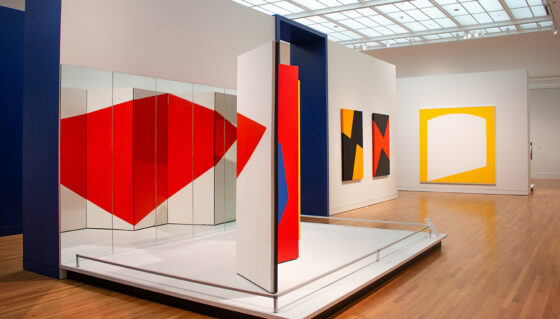
Related Exhibition
Carmen Herrera & Leon Polk Smith
August 30, 2025 — January 4, 2026
More from UMMA